Demographic Influences on Game Feature Selections Within Licensed Online Gaming Apps
Amir Krüger · Jun 24, 2026
Demographic Influences on Game Feature Selections Within Licensed Online Gaming Apps
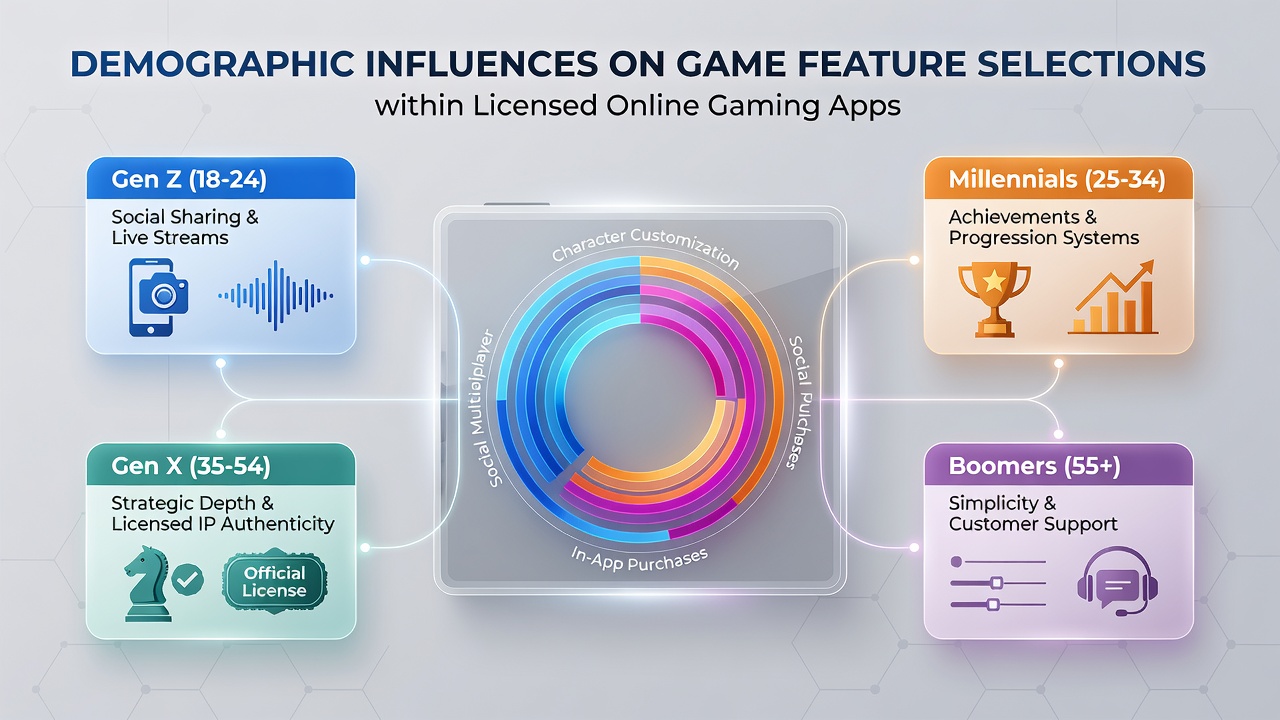
Analysts tracking licensed online gaming apps have documented clear patterns where age, gender, location, and income levels shape the specific features that players select most often, and these trends continued through the first half of 2026. Data collected across multiple jurisdictions reveals that younger users gravitate toward interactive and social elements while older cohorts prioritize streamlined interfaces and familiar mechanics, and operators adjust their platforms accordingly to meet these segmented demands.
Age-Based Feature Preferences in Mobile Gaming Environments
Players aged 18 to 34 show higher engagement with features such as live chat integration, multiplayer tournaments, and customizable avatars according to aggregated reports from North American operators, and this group tends to favor rapid reward systems that deliver frequent small wins rather than infrequent large jackpots. In contrast, those over 45 demonstrate stronger selection rates for simplified navigation menus, auto-play options with clear probability displays, and loyalty programs that emphasize long-term point accumulation over flashier bonuses, patterns that held steady in data reviewed as of June 2026.
Research conducted by academic teams at institutions like the University of Nevada, Las Vegas, has linked these preferences to differing comfort levels with technology adoption, while operators note that age also correlates with session length since younger users often play in shorter bursts across multiple apps whereas older users maintain longer single-session durations when features match their expectations.
Gender Variations in Game Mechanics and Social Tools
Studies from the American Gaming Association indicate that female players in regulated markets select social connectivity features at higher rates than male counterparts, including team-based challenges and shared progress tracking, while male users more frequently choose high-volatility slot mechanics and competitive leaderboards. These distinctions appear across both slot and table game categories, and licensed platforms have responded by offering gender-neutral defaults that still allow easy toggling between preference sets.
Geographic factors compound these trends because cultural norms influence how users from different regions interact with in-app communities, and operators licensed in multiple territories must calibrate features differently for audiences in the United States compared with those in Canada or Australia.
Regional and Income-Driven Selection Patterns
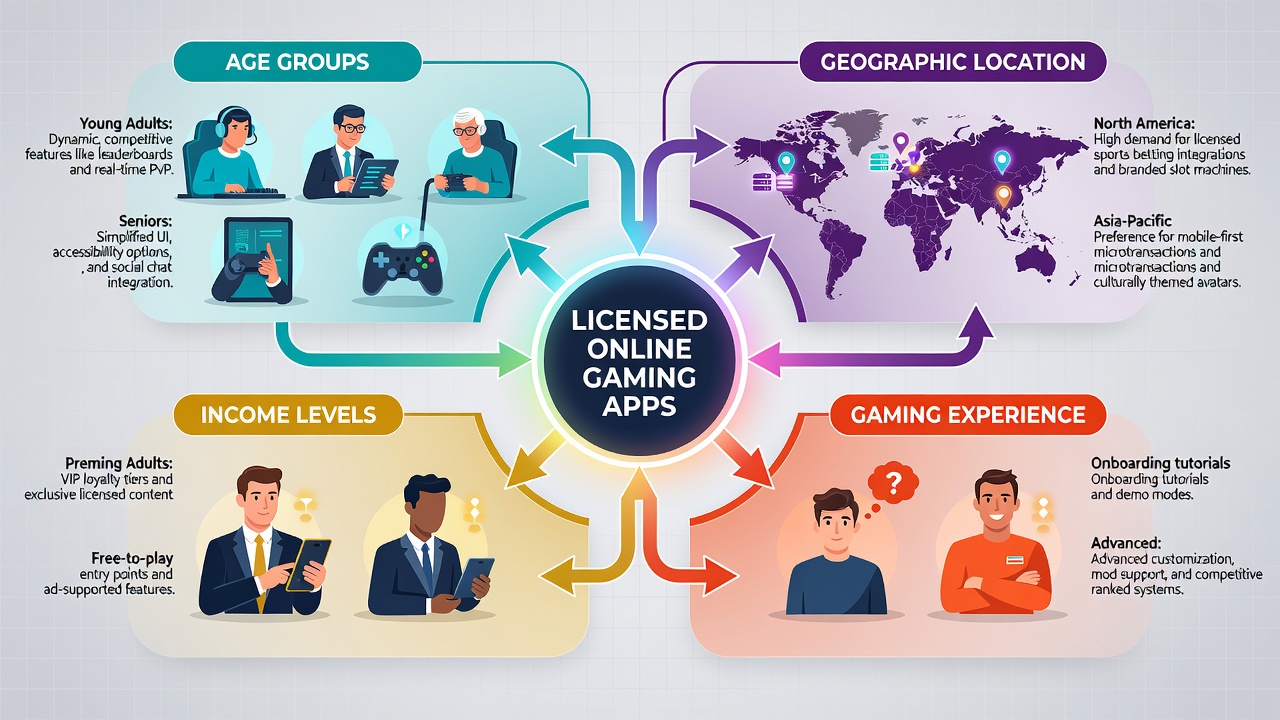
Income brackets further refine feature choices as higher-earning users demonstrate preference for premium subscription tiers that unlock exclusive game variants and faster withdrawal processing, whereas lower-income players more often select deposit-limit tools and free-to-play entry modes that still grant access to core mechanics. Regulatory data compiled by iGaming Ontario shows these income correlations remained consistent through early 2026, prompting several operators to expand responsible gaming toggles that scale automatically based on user-selected spending thresholds.
Location also plays a decisive role because players in densely populated urban centers select real-time event betting integrations more frequently than rural users who favor single-player modes with offline capabilities, and cross-border comparisons reveal that European markets licensed under frameworks like those administered by the Malta Gaming Authority exhibit stronger demand for skill-based bonus rounds than many North American counterparts.
Technology Integration and Demographic Adoption Rates
Biometric login options and AI-driven recommendation engines see faster uptake among tech-savvy younger demographics, yet older users increasingly adopt these same tools when operators provide explicit tutorials and maintain traditional password fallbacks alongside newer methods. Licensed apps that segment their onboarding flows by self-reported age groups report higher retention because feature introductions align with demonstrated user comfort levels rather than a one-size-fits-all approach.
Payment feature selections follow similar demographic lines since digital wallet integrations appeal broadly to mobile-first generations while older cohorts continue to favor direct bank transfers and credit card options even when faster alternatives exist. Observers note that these patterns emerge consistently across sports betting, poker, and casino-style offerings, which suggests operators benefit from flexible architecture that lets users mix and match payment and gameplay features independently.
Implications for Platform Design in Regulated Markets
Operators licensed across multiple jurisdictions increasingly rely on anonymized demographic datasets to guide iterative updates, and this practice allows them to test feature rollouts with specific user cohorts before wider deployment. Reports from industry groups such as the Canadian Gaming Association highlight that such targeted development reduces churn because players encounter mechanics that match their established preferences from the outset.
Seasonal fluctuations also interact with demographics because holiday periods see spikes in family-oriented social features among middle-aged users, whereas younger players maintain consistent engagement with competitive elements year-round. These overlapping influences require ongoing monitoring rather than static design choices.
Conclusion
Demographic data continues to inform how licensed online gaming apps evolve their feature sets, and the patterns documented through mid-2026 underscore the value of granular segmentation over broad assumptions. Operators that align offerings with verified age, gender, income, and regional preferences maintain stronger user retention across diverse markets while satisfying regulatory expectations for responsible design. As new data streams become available, platforms will likely refine these approaches further to accommodate shifting population dynamics without compromising compliance standards.