How Weather Data Streams Are Being Integrated into Dynamic Odds Calibration for Live International Event Wagering Interfaces
Amir Krüger · Jun 7, 2026
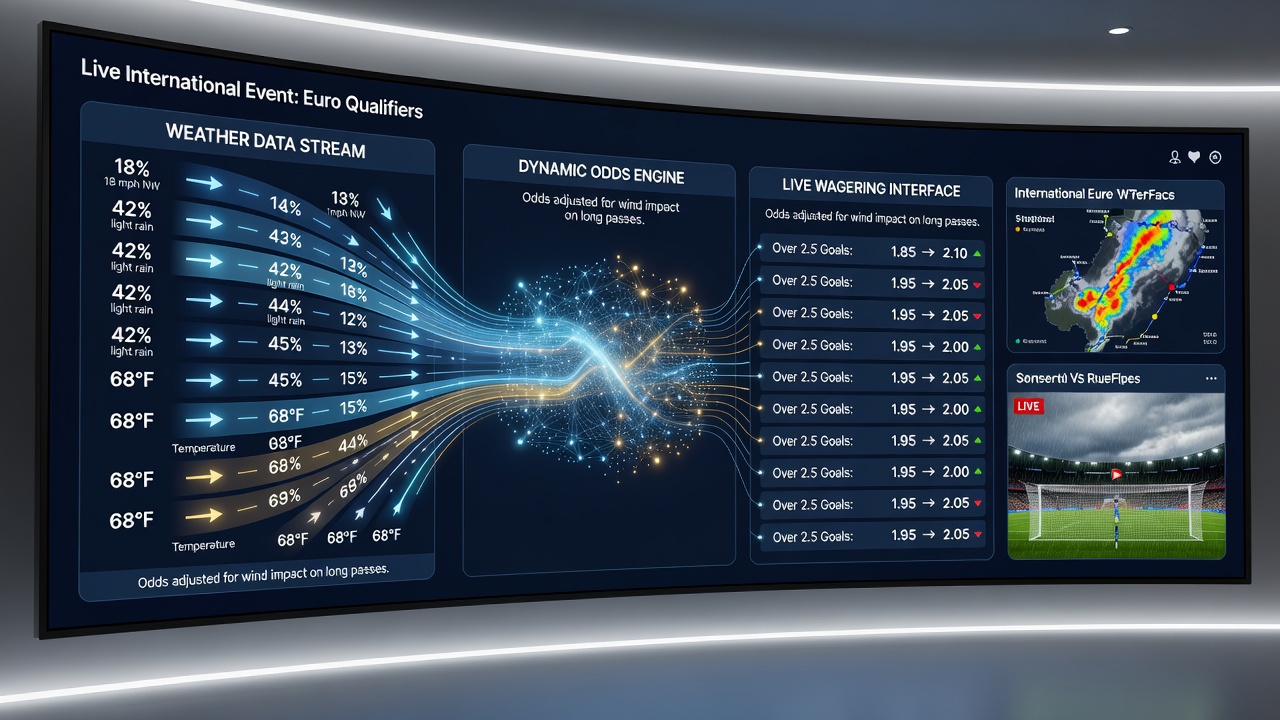
How Weather Data Streams Are Being Integrated into Dynamic Odds Calibration for Live International Event Wagering Interfaces
Weather conditions have long shaped outcomes in outdoor sports yet only recently have operators begun feeding live meteorological streams directly into odds engines that recalibrate during matches. Data arrives from satellite networks, ground sensors, and radar systems then flows through application programming interfaces that connect to international wagering platforms handling events from tennis tournaments in Melbourne to golf majors in the United States and cricket tests across Asia. Observers note that these integrations allow bookmakers to adjust probabilities within seconds when rain approaches a court or wind speeds rise above thresholds that favor certain players.
Core Data Sources and Collection Methods
National agencies supply much of the foundational input while private weather firms add hyperlocal granularity. The National Oceanic and Atmospheric Administration provides continuous radar and satellite feeds across North American venues whereas the Australian Bureau of Meteorology delivers specialized forecasts for southern hemisphere competitions. European Centre for Medium-Range Weather Forecasts models complement these sources with ensemble predictions that extend several hours ahead, and platforms combine them through standardized data formats that minimize latency. Researchers have documented how operators merge multiple streams to create composite views that update every thirty seconds during live play.
Technical Integration into Wagering Systems
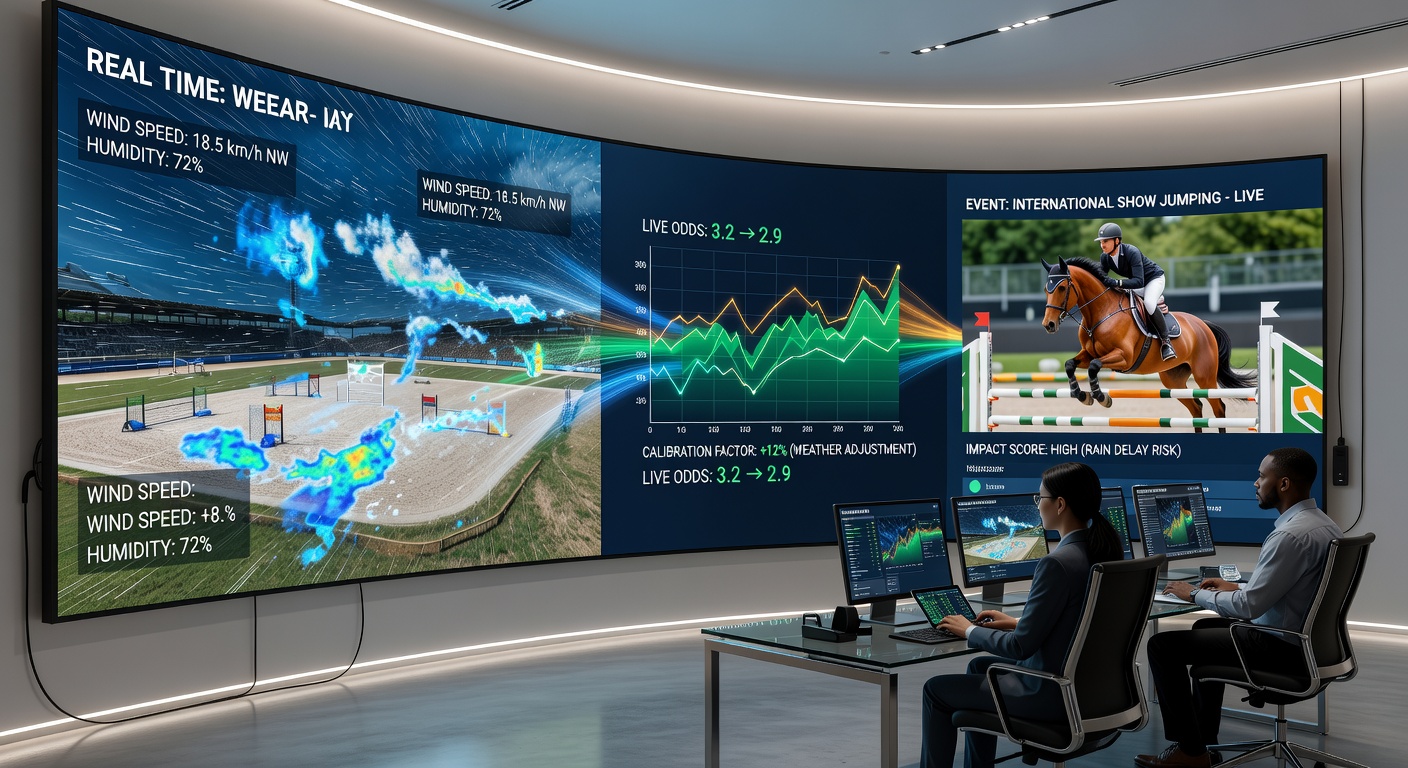
Algorithms ingest the incoming variables then apply statistical models that correlate weather factors with historical performance data. Wind direction and speed affect golf shot dispersion while humidity levels influence tennis ball bounce and cricket pitch behavior. When thresholds trigger, the system recalibrates implied probabilities and pushes revised odds to live interfaces without manual intervention. One study revealed that such automation reduces the window between weather change and odds update from several minutes to under ten seconds in many cases. Platforms maintain separate risk engines that monitor exposure across correlated markets so that a sudden shower at one venue does not create unbalanced liabilities elsewhere.
Examples from Major International Events
During the 2025 Australian Open qualifying rounds, operators adjusted set-by-set odds when radar indicated an approaching storm cell that ultimately delayed play by ninety minutes. Similar adjustments occurred at the 2026 U.S. Open golf championship where sustained winds above twenty-five kilometers per hour shifted favorite status among long hitters. Data shows these recalibrations occurred automatically once sensor readings crossed predefined bands that had been calibrated against ten years of past tournament results. Observers note that cricket matches in England during June 2026 incorporated additional drizzle probability layers because persistent light rain alters both batting averages and bowling economy rates in measurable ways.
Regulatory and Compliance Considerations
Authorities in multiple jurisdictions require operators to document the data sources and models used for dynamic pricing. Canadian provincial regulators have requested audit trails that show when weather inputs altered odds during live events while Australian state commissions examine whether systems maintain fairness when forecasts contain uncertainty ranges. Platforms respond by logging every data packet and model output so that disputes can be reviewed against verifiable meteorological records. Industry groups such as the European Gaming and Betting Association have published guidelines that encourage transparency around third-party data providers and model validation procedures.
Challenges in Data Accuracy and Latency
Forecast uncertainty remains a persistent issue because even high-resolution models carry error margins that widen beyond two hours. Operators therefore apply confidence weighting so that low-certainty predictions trigger smaller odds movements than direct sensor readings. Network latency between weather providers and betting servers can also create brief mismatches although dedicated fiber connections and edge computing nodes have reduced average delays to under one second in major markets. Experts have observed that smaller operators sometimes rely on public APIs that introduce greater variance while larger international platforms invest in proprietary sensor arrays at key venues to gain tighter control.
Future Developments in Predictive Modeling
Machine learning techniques now combine historical weather and performance datasets to generate probabilistic adjustments that extend beyond simple threshold rules. These models test thousands of past scenarios to estimate how a five-degree temperature drop or a ten-percent humidity rise will shift win probabilities for specific athletes. Some platforms have begun incorporating ensemble forecasts that produce ranges rather than single-point predictions and then translate those ranges into odds bands displayed to users. Data from the 2026 season indicates continued expansion of these methods across additional sports including rugby sevens and outdoor volleyball where environmental variables exert comparable influence.
Conclusion
Weather data integration into live odds calibration continues to evolve as sensor density increases and computational models improve. International operators now treat meteorological streams as core inputs alongside player statistics and market movements. Regulatory bodies across regions monitor these systems to ensure transparency while technology providers refine latency and accuracy. The result is a more responsive wagering environment that reflects real-time conditions at venues worldwide.